The Boss DS-1: The Most Important Pedal That Still Gets No Credit
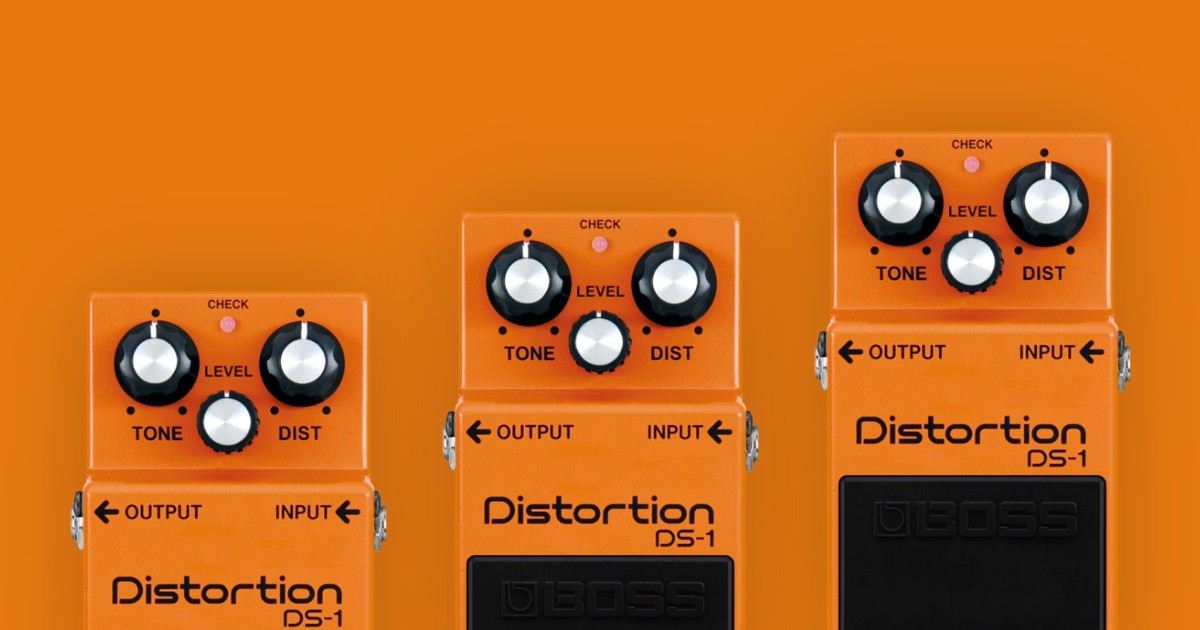
The Boss DS-1 is the best-selling distortion pedal in history, and roughly 80% of the internet’s guitar community has decided it’s beneath them. This is like refusing to eat pizza because it’s too popular. You’re not wrong that fancier food exists. You’re just hungry and sad for no reason.
The Numbers Don’t Lie (But Guitarists Do)
Boss has moved millions of DS-1s since 1978, which means there are more of these things on planet Earth than there are people in most European countries. Somewhere right now, a DS-1 is sitting in a closet next to a broken Wii controller and a stack of Guitar World magazines from 2003, waiting for someone to remember it exists.

And yet. Walk into any guitar forum, any Reddit thread, any comment section under a YouTube demo, and you’ll find the same take repeated with the confidence of someone who just discovered craft beer: “The DS-1 is a beginner pedal.” The snobs have spoken. They’ve moved on to their Pro Co RATs and their boutique overdrives with hand-selected components and waiting lists. The DS-1 is for kids, they say. For people who don’t know any better.
Kurt Cobain didn’t know any better, apparently. Steve Vai didn’t know any better. Joe Satriani, who has forgotten more about guitar tone than most of us will ever learn, didn’t know any better. John Frusciante ran a DS-2 into the front of a Marshall and recorded Blood Sugar Sex Magik with it, an album that has sold over fourteen million copies. But sure, random guy on The Gear Page with a $3,000 pedalboard, tell me more about how it sounds “harsh.”
The Circuit Nobody Talks About
The DS-1’s circuit is deceptively simple, which is part of why people dismiss it and also part of why it works. It uses a pair of clipping diodes in a feedback loop around an op-amp, which in non-engineering terms means it’s designed to break up your signal in a very specific, very controlled way. The clipping is hard and symmetrical, which gives it that aggressive, even-handed bite that sits differently in a mix than the softer, asymmetrical clipping you get from something like the Boss SD-1.

There’s a reason the DS-1 cuts through a band mix, and it’s also why it works so well when stacking drives. It’s not because it sounds “good” in isolation. Plenty of pedals sound better alone in your bedroom with the lights off and your feelings turned up. The DS-1 sounds like it belongs in a room with a drummer who’s hitting too hard and a bass player who turned up while you weren’t looking. It’s not polite. It’s not refined. It’s the distortion equivalent of showing up to a party uninvited and somehow ending up in every photo.
The tone knob, which people love to complain about, has a wider sweep than most distortion pedals. The problem is that most people crank it past noon and then wonder why it sounds like a hornet trapped inside a tin can. Below noon, it’s thick and grinding. At about 10 o’clock, paired with a tube amp that’s already working a little, it does this thing where the pick attack jumps out of the speaker and the sustain blooms behind it. That’s the sweet spot most people never find because most people don’t have the patience to treat a $49 pedal like it deserves attention.
The Price Problem
Here’s what I think happened to the DS-1’s reputation. Gear culture, at some point in the early 2000s, decided that price was a proxy for quality, and quality was a proxy for taste, and taste was a proxy for identity. If your pedalboard cost more than a used Honda Civic, you were serious. If it didn’t, you were a tourist.
The DS-1 costs about as much as a tank of gas. You can buy one at any guitar shop in the world, and most pawn shops too. It comes in a plastic box that looks like it was designed by the same person who designed the packaging for off-brand batteries. Nothing about it says “I’m discerning.” Everything about it says “I’m practical,” and in guitar culture, practical is the worst thing you can be. It’s the cargo shorts of distortion pedals — functional, affordable, universally mocked by people who own too many things.
The Waza Craft DS-1W is Boss’s answer to this problem. Same circuit (with a custom mode that opens up the low end), but in a fancier enclosure with the Waza label, which is Japanese for “please take me seriously now.” It sounds great. It also costs three times as much, and I’d be lying if I said that didn’t make people respect it more.

The DS-1X goes even further, adding digital processing to clean up the things people complained about. Both are good pedals. Neither is necessary if you spend ten minutes learning how the original’s tone knob works.

Why It Still Matters
I think the DS-1 might be one of the most honest pedals ever made. Not the best-sounding. Not the most versatile. Honest.
The RAT is meaner. A good Marshall-style overdrive is more dynamic. The Friedman BE-OD sounds like a hundred-watt head in a box, which is exactly what it’s trying to do. All of those pedals are doing something — performing a version of distortion that flatters you, fills the gaps, smooths out the parts where your playing gets sloppy.


The DS-1 doesn’t do that. You can’t play gently through a DS-1 and expect it to flatter you. It won’t. It’ll sound bad if you play bad, and it’ll sound like you’re in a band if you play like you’re in a band. That’s not a flaw. That’s a feature. It’s also the reason so many guitarists trade them away — not because the pedal failed them, but because it refused to lie to them, and that’s a hard thing to forgive at any price point.
There’s a specific combination that the DS-1 nails better than anything else in its price range, or honestly several price ranges above it: cheap enough that you don’t worry about it, simple enough that there’s nothing to hide behind, and aggressive enough that it forces you to commit. It’s no accident it shows up on our best pedals under $100 list. Three knobs. One sound. Under sixty bucks. That’s the whole pitch, and it’s been working since Jimmy Carter was in office.
Some pedals cost $400 and make you feel like you made a wise investment. The DS-1 costs sixty bucks and makes you feel like a guitarist. I think the second one matters more.