The Klon Centaur Problem: When Hype Becomes the Product
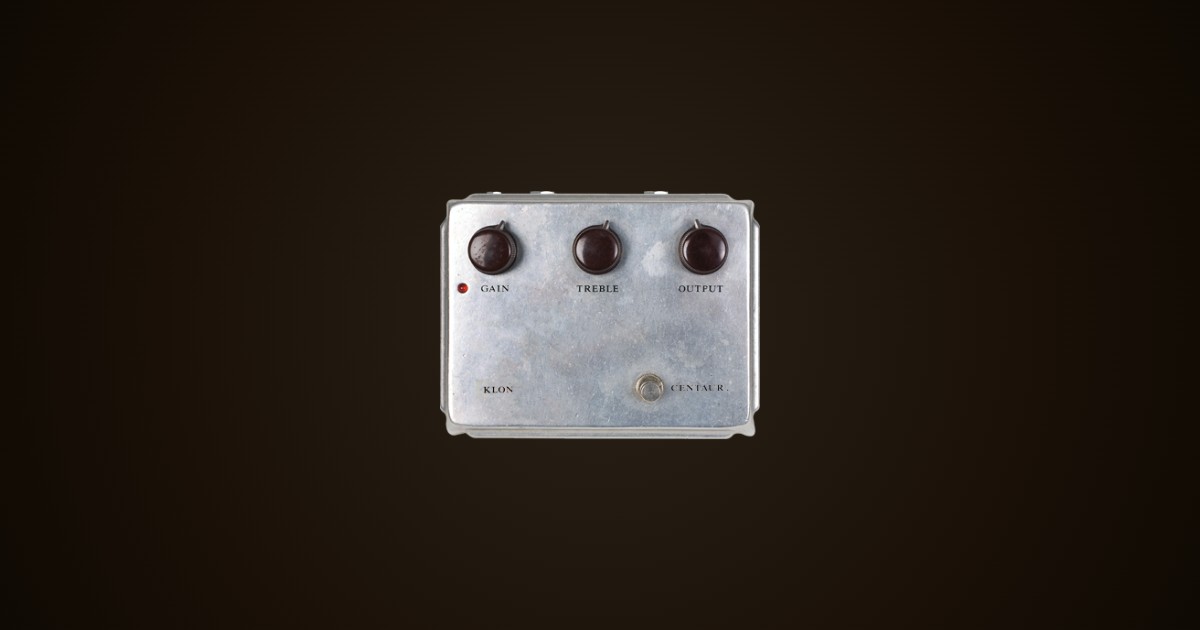
A guitar pedal currently sells for more than a 2019 Honda Civic with reasonable mileage. Not a rack unit stuffed with vacuum tubes and hand-wound transformers. Not a vintage amplifier blessed by the Pope of Tone. A pedal. One stomp switch, three knobs, a gold enclosure with a hand-painted horseman that looks like it belongs on the cover of a mythology textbook you’d find at a garage sale. The Klon Centaur routinely moves for $4,000 to $6,000 on the used market, and nobody involved in the transaction seems to think this is as unhinged as it obviously is.
Meanwhile, a $30 clone of the same circuit sits on Amazon with four and a half stars and free shipping.
Something has gone wrong here.
The Myth of Bill Finnegan
Bill Finnegan built the Klon Centaur in his apartment in the Boston area, starting in the early 1990s. He wasn’t a big company. He was a guy with a soldering iron and an obsession with transparent overdrive at a time when “transparent overdrive” wasn’t yet a phrase that could start a fistfight in a comments section. He built each one by hand, potted the circuit in epoxy so nobody could copy it (a move that was either genius brand protection or the gear equivalent of putting a padlock on your diary), and sold them for around $225, a price that climbed over the years. He was chasing transparent overdrive before the category had a name, and you can browse overdrive pedals on PedalFilter now to see just how many builders followed his lead.

He stopped making them in 2008 after producing roughly 8,000 units. That’s it. Eight thousand pedals, and then the factory closed, if you can call one man’s apartment a factory. The demand didn’t stop when the supply did. If anything, the demand got louder. Prices on the used market started climbing. Then they kept climbing. Then they went past $1,000 and kept going. Then past $2,000. The current going rate for a Klon Centaur in good condition is somewhere between $4,000 and $6,000, depending on the color, the serial number, and how badly someone wants to tell people they own a Klon Centaur.
That last part is the uncomfortable truth nobody in the Klon conversation wants to confront.
What You’re Actually Paying For
The Klon’s circuit was eventually decoded, despite the epoxy. Some very patient people with X-ray machines and a lot of free time figured out what was inside. It uses a charge pump to boost the internal voltage to 18V, a germanium diode clipping section, and a clean blend that mixes your unaffected signal back in with the driven signal. That clean blend is the secret sauce, the thing that gives the Klon its “transparent” character. Your dry tone is always present underneath the drive, which is why it feels like your amp but more.
Here’s the thing: none of those components are exotic. The germanium diodes are a nice touch, but they’re not unobtainium. The charge pump is a standard circuit trick. The clean blend, which was arguably the Klon’s biggest innovation, has been adopted by dozens of pedals since. The circuit works. It works well. It does not work $5,000 well.
When you pay $5,000 for a Klon Centaur, you are not paying for the circuit. You are paying for the scarcity, the story, the gold enclosure with the hand-painted horseman, and the right to say you own one. You are paying for mythology. And I’m not saying mythology doesn’t have value. Every guitar that’s ever been called “vintage” trades on the same principle. But I think it’s worth being honest about what the transaction actually is, because calling it a tone purchase is a lie that the market has agreed to tell itself.
The Clone Wars
Every mythology eventually spawns an empire of imitators, and the Klon’s decoded circuit didn’t just spawn a few. It spawned an entire galactic conflict’s worth of clones at every price point, from $30 to $500, each claiming to be the one true heir to Finnegan’s transparent overdrive throne. Call it the Clone Wars. I’m going to, because the analogy is too perfect to leave on the table.
The Separatist Army: Budget Clones

The Mosky Golden Horse costs about $30. It’s a Klon clone in a tiny enclosure with three knobs and a paint job that looks like it was designed during someone’s lunch break. By every credible A/B comparison on YouTube, and there are dozens, it sounds alarmingly close to the pedal people pay 140 times more for. That’s either a triumph of accessible manufacturing or a damning indictment of the used gear market, depending on how much money you’ve spent on gold boxes.
The Electro-Harmonix Soul Food is the most popular Klon-style circuit on the market, and it costs around $80. It’s not an exact clone. EHX made some changes, used different diodes, and added a bass boost switch. But the fundamental character is there: that clean-blend transparency, that midrange push, that “your amp but more” quality. Nine out of ten guitarists couldn’t tell the difference between a Soul Food and a real Centaur in a blind test with a band playing. The tenth is lying.

The Wampler Tumnus splits the difference at about $150, with a tighter build quality than the budget options and a sound that gets close enough to the original that arguing about the remaining gap becomes a hobby rather than a useful exercise.
The Republic: Mid-Range and Faithful Reproductions
This is where the clones start getting serious about component accuracy. The Arc Effects Klone V2 uses germanium diodes and a charge pump, runs about $170, and aims for spec-for-spec fidelity. The J. Rockett Archer Ikon takes a similar approach with its own refinements and has built a devoted following among gigging players who want the Klon sound without the Klon mortgage payment. The Ceriatone Centura goes even further on the accuracy front, matching component values down to the resistor, which is either admirable dedication or beautiful madness depending on how you feel about resistors.

The RYRA Klone deserves mention here too. It’s one of the older and more respected clones on the market, built with a focus on getting the feel right, not just the frequency response. The Klon’s magic was always partly in how it responded to pick dynamics, and the RYRA nails that quality in a way that some of the cheaper clones miss.
The Jedi Council: Boutique Interpretations
And then there are the builders who looked at the Klon circuit and said, “What if we took this idea and made it ours?” These aren’t clones in the strict sense. They’re more like translations, pedals that start with the Klon’s philosophy of transparent overdrive with a clean blend and then push it somewhere new.

The Mythos Mjolnir is the one that keeps coming up in conversations about Klon-style circuits that have transcended the original. Zach Broyles at Mythos builds these in small batches, and the Mjolnir takes the transparent overdrive concept and adds a musicality to the midrange that the original Centaur hints at but doesn’t fully commit to. It’s the kind of pedal that makes people stop asking “how close is it to a Klon?” and start asking “do I even care anymore?”

Nordvang is doing some of the most interesting work in this space. Martin Nordvang builds pedals in Denmark with the kind of obsessive attention to voicing and component selection that would make a Swiss watchmaker nod approvingly. The No.1 Signature is his take on the Klon topology, and it doesn’t sound like a clone. It sounds like what happens when someone understands a circuit well enough to improve on it without losing what made it special. The Gravity pushes the concept further into higher-gain territory. These are expensive pedals with their own waitlists, which is either ironic or inevitable given their lineage.

The Decibelics Golden Horse takes the opposite approach: a faithful, component-accurate clone built to a premium standard, for people who want the Klon sound specifically but in a pedal that was assembled this decade and doesn’t require a second mortgage.
The Chosen One: Finnegan’s Own Answer
The Klon KTR, which Bill Finnegan himself designed as a more affordable successor, uses the same circuit in a smaller, manufactured enclosure with a retail price of $269. Finnegan has publicly stated that the KTR sounds identical to the Centaur. The man who built the thing is telling you that you don’t need to spend $5,000 on the thing. How much clearer can it get?

The Clone Wars, like most wars, have produced a clear conclusion that nobody wants to accept: the clones won. The circuit is out there, the builders have it, and the sound is available at every price point from a large pizza to a small car payment. The only thing the clones can’t replicate is the gold enclosure and the story, and those were never what made the Centaur sound good in the first place.
Why the Hype Persists
If the clones sound the same and the designer says his cheaper version is identical, why do Klon Centaurs still sell for the price of a decent used car? There are three reasons, each less rational than the last.
First: investment. Klons have appreciated in value faster than most stocks over the past fifteen years. People buy them with the expectation that they’ll be worth more next year. This makes the Klon less of a guitar pedal and more of a very loud mutual fund.
Second: identity. Owning a Klon Centaur says something about you. It says you’re committed enough to your tone to spend four figures on a single overdrive, which in guitarist circles is the equivalent of a secret handshake. It’s the Hermes Birkin bag of pedalboards. The price is the feature.
Third, and this is the one that’s hardest to argue with: some people just want the original. They want the one Bill Finnegan built in his apartment, the one with the hand-painted horseman, the one that started the whole thing. There’s an emotional logic to that, even if there’s no sonic logic to it. I collect vinyl records even though streaming sounds objectively better, so I’m not going to throw stones from my glass house of irrational audio preferences.
So Is It Good?
Yes. The Klon Centaur is a good overdrive pedal. It’s not a magic overdrive pedal. It’s not a your-life-will-change overdrive pedal. It’s a well-designed circuit that does transparent overdrive better than most pedals did in 1994 and about as well as dozens of pedals do in 2026.
I think the Soul Food gets you 90% of the way there for $80. I think the KTR gets you 99% of the way there for $269, and the remaining 1% is the gold paint and the story. If you want to see which overdrives actually earn their reputation on sonic merit alone, we put together a list of 7 overdrive pedals that actually live up to the hype. I think if you play one in a blind test against three of its clones, you might pick it, or you might pick the clone, and either way you’d sound great.
The Klon Centaur problem isn’t that the pedal is overhyped. The pedal is fine. The problem is that the hype became the product. The story became more valuable than the sound. And in a market where story and sound are supposed to be the same thing, that distortion (pun very much intended) changes how everyone thinks about what gear is worth.
Five thousand dollars for an overdrive pedal. Thirty dollars for the same circuit in a different box. The gap between those two numbers isn’t filled with tone. It’s filled with want, and want has never once cared about a blind A/B test.